
Strong
Steroid-refractory acute GvHD
FDA-approved December 2024 (remestemcel-L). Pivotal trial demonstrated 70% overall response rate at Day 28 in paediatric SR-aGvHD, with four-year survival data.


An independent scientific review of mesenchymal stromal cell therapies, contextualised for the Fijian health system and built around an international cGMP supply pathway.

Non-communicable diseases account for 67.3% of all deaths in Fiji. The probability of premature mortality from NCDs between ages 30 and 70 is 38.8%.
Source: WHO Fiji Country Profile. Detailed disease-burden analysis in Chapter 2 of the report.
Twelve approved MSC products across seven countries. Over 1,200 registered clinical trials. The report covers 13 indications in depth — these four anchor the strongest case for Pacific health systems.
FDA-approved December 2024 (remestemcel-L). Pivotal trial demonstrated 70% overall response rate at Day 28 in paediatric SR-aGvHD, with four-year survival data.
67 registered clinical trials. One approved product in the Republic of Korea. Consistent WOMAC pain and function improvements; MRI evidence of cartilage volume preservation.
EMA marketing authorisation granted March 2018 following positive Phase III RCT. Single intralesional injection of allogeneic adipose-derived MSCs achieved significantly higher remission rates.
Robust preclinical evidence. Early clinical case series demonstrate accelerated wound closure in chronic cutaneous ulcerations and diabetic foot ulcers. Directly addresses Fiji's leading NCD burden.
Full evidence tables across all 13 indications appear in Chapter 5 of the report. Every factual claim carries a DOI or PMID citation.
Beyond reactive disease treatment, MSC therapies are increasingly studied for proactive applications in healthy aging. The clinical evidence base for frailty, age-related inflammation, and wellness indications is expanding rapidly — with particular relevance to populations where ageing intersects with NCD burden.
Phase 2 randomised trials of allogeneic MSC infusions in older adults with frailty syndrome have demonstrated improvements in physical performance — including six-minute walk distance and gait speed — and reductions in inflammatory biomarkers. Multiple programs are advancing toward Phase 3.
"Inflammaging" — chronic low-grade systemic inflammation that accompanies biological aging — is increasingly recognised as a unifying driver of multiple age-related conditions. The immunomodulatory mechanism of MSCs is mechanistically aligned with attenuating this state.
Proactive MSC interventions are increasingly offered globally for quality-of-life, recovery, and performance applications. Evidence quality varies significantly by indication — robust randomised trials remain the standard for any clinical claim, and regulatory diligence is essential.
Longevity and frailty applications are an active extension of the core MSC clinical pipeline. Pacific demographics — where aging populations meet a high NCD burden — represent a particularly compelling deployment context.
A clear division of responsibility between Sponsor and Manufacturer. Patient access via established international cGMP supply, not greenfield domestic build-out.
Clinical strategy, regulatory engagement with the Fiji Medicinal Products Board, the Fiji MRA, and the National Health Research Ethics Review Committee. Patient pathway design and real-world evidence generation.
cGMP-grade MSC drug product produced under 21 CFR 210/211 and 21 CFR 1271, aligned to ICH Q-series. FDA-registered facility. Independent Quality Unit oversight. International cold-chain logistics.
Learn more about Made's capabilitiesInternational cGMP supply via established US infrastructure delivers patient access years faster than greenfield domestic manufacturing — with progressive technology transfer as the regional ecosystem matures.
Made Scientific is a U.S.-based, FDA-registered cell therapy CDMO (FEI: 3039488058), headquartered in Princeton, NJ. The hUC-WJ-MSC drug product for this partnership is manufactured under a Quality Management System aligned with FDA 21 CFR 1271, 21 CFR 210/211, and ICH Q7, Q9, and Q10 — the international standards that govern modern cell therapy manufacture.
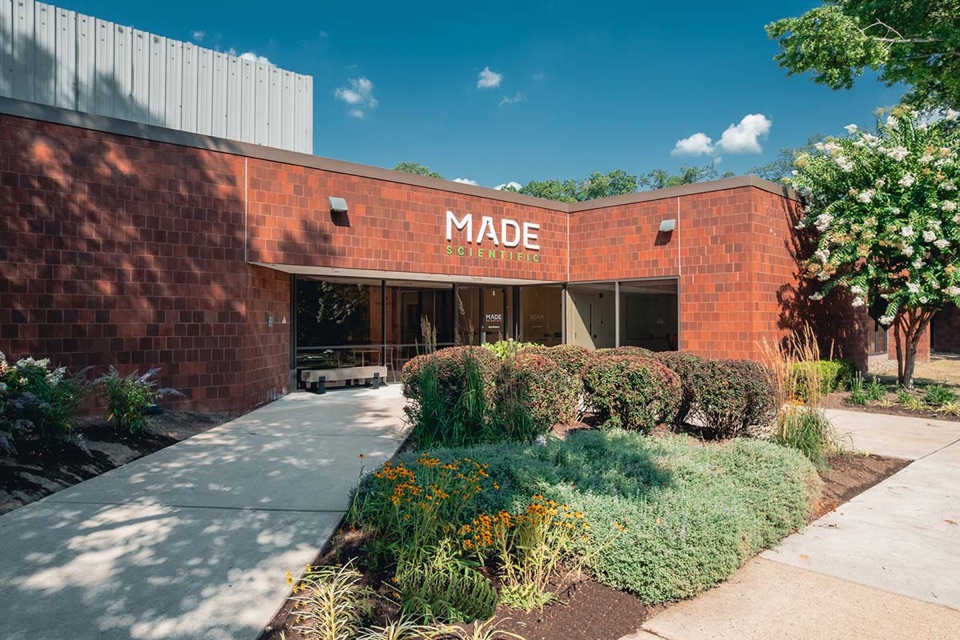
Ethically sourced starting cellular material. 2D and 3D expansion protocols with integrated quality control. Every batch is characterised through analytical release testing — identity, purity, potency, sterility — and is consistent, controlled, and traceable from raw material to clinical use.
Current cleanroom suites at 201 College Road East support clinical-to-commercial supply today. Expanded large-scale ballroom suites at 307 College Road East come online June 2027 — purpose-built to scale with the partnership.
Manufacture aligns with Fiji's Medicinal Products Act 2011 and Classification Scheme Regulations 2021. PranaGen Bioscience holds in-country authorisations — FNHRERC / CHRERC ethics clearance, import permit, listing on the Provisionally Authorized Medicinal Products Register where applicable, and engagement of a Fijian importer licensed by the FCCC.
Fiji MRA listing for the MSC drug product. FNHRERC ethics approval. Import permit pathway via the Fiji Medicinal Products Board. Sponsor–Manufacturer agreement and quality-system alignment.
Initial patient cohorts under a PranaGen Bio-led clinical pathway. International cGMP supply from Made Scientific. Real-world evidence generation aligned to the strongest-evidence indications.
Continued international cGMP supply with progressive regional capability development. Expansion of indications backed by the strongest accumulated evidence and Pacific-specific real-world data.

This 110-page scientific dossier synthesises the global evidence base for mesenchymal stromal cell (MSC) therapies — across clinical safety, efficacy across 13 indications, regulatory frameworks in eight jurisdictions (EU, Japan, Korea, Australia, India, China, Canada, United States), manufacturing and quality requirements, and the emerging research pipeline.
The review is independent and citation-backed. Every factual claim carries a DOI or PMID reference. Findings are framed at the policy and pathway level to support evidence-based decision-making by health authorities considering whether and how to enable access to MSC-based therapies.
Editable .docx version available on request.

Veeral Rathod
President
veeral@veeral.pro
Ramon Coronado, M.S., PhD
Chief Executive Officer
rc@cubicbio.com
Joe Sinclair
VP, Head of Commercial
joseph.sinclair@madescientific.com